Prostatectomy
Our urologists use precise robotic-assisted surgery to treat prostate conditions. We can help improve your symptoms and quality of life.
Medically reviewed by Jared Whitson, M.D. on April 21, 2026.

Expertise in Advanced Robotic-Assisted Prostatectomy
Prostatectomy is a procedure to remove part or all of your prostate gland. Prostate cancer treatment often includes a radical prostatectomy, where a surgeon removes your entire prostate. Conditions such as benign prostatic hyperplasia (BPH), also known as enlarged prostate, do not require the whole prostate to be removed and are treated with a simple (partial) prostatectomy.
UC Davis urology experts use advanced, minimally invasive robotic-assisted techniques for prostatectomy. Robotic-assisted surgery helps surgeons make precise incisions in delicate areas around or within your prostate gland. In the case of radical prostatectomy for prostate cancer, these techniques can help you maintain your erectile function and urinary control after surgery.
We are a U.S. News and World Report High Performing Hospital for prostate cancer surgery. We earned this distinction because of our patient outcomes and commitment to quality and safety.
On this page
Prostatectomy Procedures
Your urologist will recommend a radical or simple prostatectomy based on your condition and overall health. Our urologic surgeons use minimally invasive robotic-assisted techniques that preserve your nerve function and reduce your recovery time.
Radical Prostatectomy
Radical prostatectomy treats localized prostate cancer that has not spread beyond your prostate gland. Your surgeon uses a robotic-guided camera and thin instruments to make precise incisions in your lower abdomen. The surgeon carefully removes your prostate gland and two fluid-filled sacs, called seminal vesicles, that sit next to your prostate. Nearby lymph nodes may be removed at the time, depending on the risk of involvement.
Simple Prostatectomy
Simple prostatectomy treats an enlarged prostate gland. Your provider may recommend this procedure when your condition causes problems with urinating. A surgeon uses small incisions and precision-guided instruments to carefully remove only the inner part of your prostate which is blocking the flow of urine.
Request an Appointment
As Sacramento's No. 1 hospital, you'll benefit from unique advantages in primary care and specialty care. This includes prevention, diagnosis and treatment options from experts in 150 specialties.
Referring Physicians
To refer a patient, submit an electronic referral form or call.
Patients
Call to make an appointment.
Consumer Resource Center
Preparing for Prostatectomy
Your urologist discusses the procedure you will have and gives you instructions to prepare for surgery. You may need to stop taking certain medications a week or two before your procedure.
-

Pre-Operation
The day before your surgery, you follow a clear liquid diet. Follow your urologist’s instructions on when to stop eating and drinking. Take any medications they recommend at the appropriate time.
-

During Surgery
You will receive medicine in an IV and a general anesthetic with a breathing tube, so you sleep during the procedure and do not feel pain. Robotic-assisted prostatectomy usually takes between two to four hours.
-
Recovery
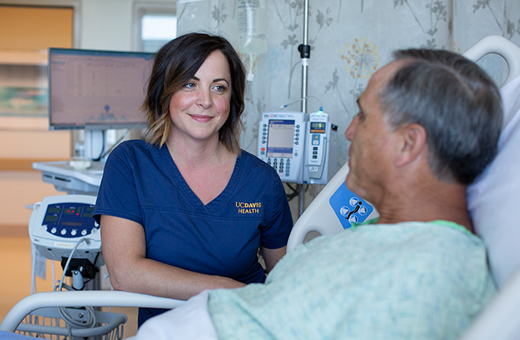
You will wake up from surgery with a Foley catheter in your bladder to help drain urine. After radical prostatectomy, most people stay in the hospital overnight. Some may go home the same day. After simple prostatectomy, most patients go home the same day. You will do exercises to support blood flow. You also learn breathing techniques to keep your lungs clear. Your catheter will stay in place for three to five days after simple prostatectomy and for seven to 10 days after radical prostatectomy.
Home Care for Prostatectomy
Your care team provides instructions on surgery site and catheter care. Your urologist removes the catheter in our office at a follow-up appointment. You may feel tired and uncomfortable for a few weeks after surgery.
Regain Bladder Control
After surgery, you may experience urine leakage. This is normal after radical prostatectomy. Most people regain their bladder control within six months. The risk of leakage after simple prostatectomy is lower and usually not as long. Your care team will discuss pelvic floor exercises you can do to strengthen the muscles that control your bladder.
Avoid Driving and Heavy Lifting
Avoid driving while you have a catheter or are taking narcotic pain medication. If you ride in a car, try to take short trips or make frequent stops. Do not do any heavy lifting or strenuous exercise for six weeks.
Prevent Constipation
Try not to strain during bowel movements while you recover from surgery. Drink eight glasses of water daily and eat a diet with plenty of fiber. Your urologist may prescribe a stool softener to prevent constipation.
Awards and Recognitions

Ranked among the best in 6 specialties
A U.S. News & World Report best hospital in cancer care, cardiology, heart & vascular surgery, geriatrics, neurology & neurosurgery, orthopedics, and pulmonology & lung surgery.

Ranked among the nation’s best children’s hospitals
U.S. News & World Report ranked UC Davis Children’s Hospital among the best in pediatric nephrology, orthopedics*, and neonatology. (*Together with Shriners Children’s Northern California)

Ranked Sacramento’s #1 hospital
Ranked Sacramento’s #1 hospital by U.S. News, and recognized in 23 types of care including acute kidney failure, cancer care, cardiology, heart & vascular surgery, COPD, colon cancer surgery, diabetes, diabetes & endocrinology, ear, nose & throat surgery, gastroenterology & GI surgery, geriatrics, gynecological cancer surgery, heart arrhythmia, heart attack, heart failure, hip fracture, hip replacement, leukemia, lymphoma & myeloma, lung cancer surgery, neurology & neurosurgery, orthopedics, pneumonia, pulmonology & lung surgery and stroke.

The nation’s highest nursing honor
UC Davis Medical Center has received Magnet® recognition, the nation’s highest honor for nursing excellence.

World-class cancer care
One of ~59 U.S. cancer centers designated “comprehensive” by the National Cancer Institute.

A leader in health care equality
For the 13th consecutive year, UC Davis Medical Center has been recognized as an LGBTQ+ Healthcare Equality Leader by the educational arm of America’s largest civil rights organization.
Latest Urology News