Shoulder Replacement
We are experts in surgery that reduces shoulder pain and increases mobility. Our goal is to help to improve your quality of life.
Medically reviewed by Mauro Giordani, M.D. and Mariano Menendez, M.D. on May 19, 2026.

Nationally Recognized Approaches to Shoulder Replacement
At UC Davis Health, our highly experienced orthopaedic surgery team offers shoulder replacement using the most advanced techniques. This includes robotic-assisted shoulder surgery that’s only offered at a few centers in the United States.
These surgeries are carefully planned using advanced imaging and performed by fellowship-trained shoulder specialists who tailor each procedure to your anatomy and goals. Robotic assistance can help your surgeon place implants with greater precision and consistency.
On this page
Conditions Treated by Shoulder Replacement
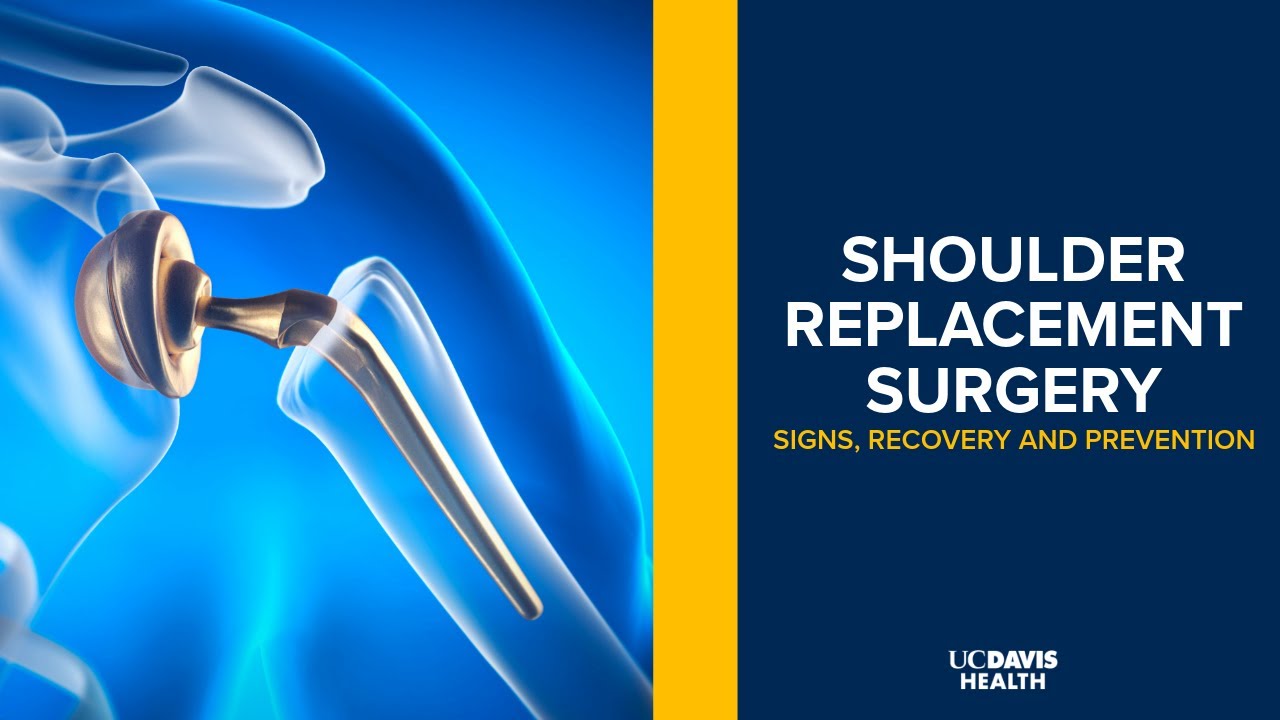
Your shoulder contains a ball and socket joint, with a bone at the top shaped like a ball (head) that fits into a socket in your shoulder blade (glenoid). You may have shoulder replacement surgery, also called shoulder arthroplasty, if you have damage in one or more parts of your shoulder. Your surgeon replaces those parts of your shoulder joint with artificial parts made of plastic and metal.
Shoulder replacement can help to treat:
- Avascular necrosis (osteonecrosis)
- Fractures
- Osteoarthritis
- Posttraumatic arthritis
- Rheumatoid arthritis
- Rotator cuff injuries
Surgeons may use shoulder replacement when options like medications, changing your activities and doing physical therapy have not helped to relieve these symptoms:
- Difficulty with movement
- Pain
- Stiffness
- Swelling

Types of Shoulder Replacement
We offer shoulder replacement options that use highly advanced techniques, including robotic-assisted surgery, when possible.
Read how a robotic-assisted shoulder replacement gave patient mobility back
Hemiarthroplasty (Partial Shoulder Replacement)
The hemiarthroplasty procedure involves your surgeon replacing only the ball of your shoulder with a metal ball. We may recommend a hemiarthroplasty when you only have arthritis in the head of your shoulder.
Reverse Total Shoulder Replacement
Your surgeon replaces and switches the positions of the ball and socket during a reverse total shoulder replacement. They attach the ball to your shoulder blade and the socket to your upper arm bone. We may recommend a reverse total shoulder replacement if you have severe rotator cuff damage or severe shoulder fractures, with or without arthritis. We are the only center in the Sacramento region to offer robotic-assisted reverse shoulder replacement surgery.
Total Shoulder Replacement
A total shoulder replacement removes damaged or arthritic shoulder joints and replaces them with a metal ball and a plastic socket. The ball and socket will be either pressed into the bone or held in place with bone cement.
Request an Appointment
As Sacramento's No. 1 hospital, you'll benefit from unique advantages in primary care and specialty care. This includes prevention, diagnosis and treatment options from experts in 150 specialties.
Referring Physicians
To refer a patient, submit an electronic referral form or call.
Patients
Call to make an appointment.
Consumer Resource Center
Preparing for Surgery
You may have questions and concerns before your shoulder replacement surgery. Your care team will discuss what to expect and help ensure you feel comfortable with the procedure and well-informed on the risks and the recovery process.
-
Before Shoulder Replacement
You will have a consultation with an orthopaedic surgeon to discuss the best type of shoulder replacement surgery for you. They will do a physical examination and review imaging tests, such as a shoulder X-ray, CT scan or MRI. Your doctor will ask you to stop certain medications two weeks before surgery, including nonsteroidal anti-inflammatory drugs (NSAIDs) and most arthritis medications. You will also need to stop taking blood thinners before surgery. Your surgeon will explain the risks and recovery time for your specific procedure.
Your surgeon may tell you to have any major necessary dental work completed several weeks before your shoulder replacement. Dental work can be a source of infection that can spread to your new shoulder.
-

During Shoulder Replacement
The surgical process will vary depending on what type of shoulder replacement surgery you have. You may have general anesthesia to make you sleep so you won’t feel anything during surgery or local anesthesia to numb your shoulder. Your surgeon will make a cut (incision) in your shoulder to reach and replace your damaged shoulder joints. In robotic-assisted surgery, they will use a robotic arm to help. After treatment, they will stitch or staple the opening and use a bandage to protect the surgical area. The surgery usually takes about two hours.
-

After Shoulder Replacement
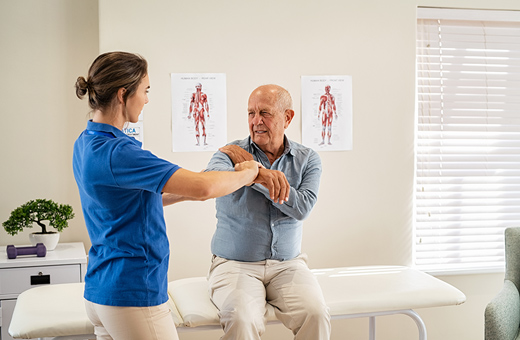
You will rest after surgery until the anesthesia wears off. You can often return home that day or may need to stay overnight or for several days. Your arm will be in a sling, which you will need to wear for two to six weeks. Your doctor will prescribe medication to help with pain relief. You will need to start physical therapy soon after the surgery to help increase your strength and range of motion. You can usually start other gentle activities, such as dressing and feeding yourself, within two to three weeks.
Home Care
You will need to take time for your shoulder to heal properly when you return home. Your care team will give you specific instructions to help you recover after surgery. You will usually need to wait three to six months to start sports or more intense exercise.
Avoid Lifting
Don’t lift anything that weighs more than a glass of water for the first two to six weeks after surgery.
Do Home Exercises
Be sure to do gentle exercises at home, sometimes two or three times a day, to increase strength in your shoulder.
Don’t Drive
You will need to wait for about six weeks to resume driving.
Awards and Recognitions
Ranked among the best in 6 specialties
A U.S. News & World Report best hospital in cancer care, cardiology, heart & vascular surgery, geriatrics, neurology & neurosurgery, orthopedics, and pulmonology & lung surgery.
Ranked among the nation’s best children’s hospitals
U.S. News & World Report ranked UC Davis Children’s Hospital among the best in pediatric nephrology, orthopedics*, and neonatology. (*Together with Shriners Children’s Northern California)
Ranked Sacramento’s #1 hospital
Ranked Sacramento’s #1 hospital by U.S. News, and recognized in 23 types of care including acute kidney failure, cancer care, cardiology, heart & vascular surgery, COPD, colon cancer surgery, diabetes, diabetes & endocrinology, ear, nose & throat surgery, gastroenterology & GI surgery, geriatrics, gynecological cancer surgery, heart arrhythmia, heart attack, heart failure, hip fracture, hip replacement, leukemia, lymphoma & myeloma, lung cancer surgery, neurology & neurosurgery, orthopedics, pneumonia, pulmonology & lung surgery and stroke.
The nation’s highest nursing honor
UC Davis Medical Center has received Magnet® recognition, the nation’s highest honor for nursing excellence.
World-class cancer care
One of ~59 U.S. cancer centers designated “comprehensive” by the National Cancer Institute.

A leader in health care equality
For the 13th consecutive year, UC Davis Medical Center has been recognized as an LGBTQ+ Healthcare Equality Leader by the educational arm of America’s largest civil rights organization.
Latest Orthopaedics News