Orthotics
We offer standard and custom-fitted devices that align, protect and support your body. Orthotics can help you move better with less pain.
Medically reviewed by Daniel Munoz on Sep. 30, 2026.
Orthotics Tailored to Your Unique Needs
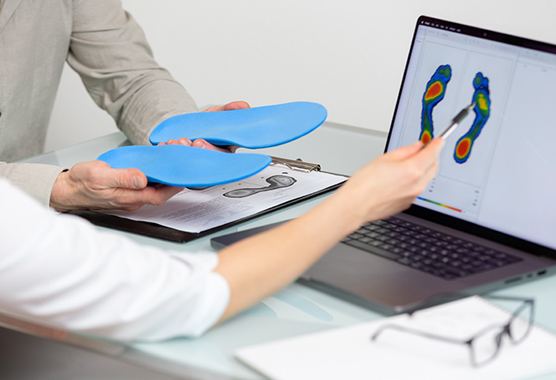
At the UC Davis Health Orthotics Workshop, our orthotic specialists (orthotists) create customized devices tailored to fit your unique body shape and needs. We also provide properly fitted, ready-made orthotics.
Orthotists are part of our collaborative care team at the UC Davis Health Department of Physical Medicine and Rehabilitation (PM&R). They work closely with physical therapists, occupational therapists, orthopaedic doctors and other experts to help make movements less painful or difficult.
On this page
Types of Orthotics
Having a medical condition or injury that affects how you move can be challenging. An orthotic device can help. Also called an orthosis, these devices support the affected part of your body. You can move and complete daily tasks more safely and easily with less risk of further injury.
Types of orthoses include:
- Ankle braces and shoe inserts to align, support and take pressure off your ankles and feet
- Cranial orthotics, such as helmets, to correct the shape of an infant’s skull or provide protection after a brain injury or surgery
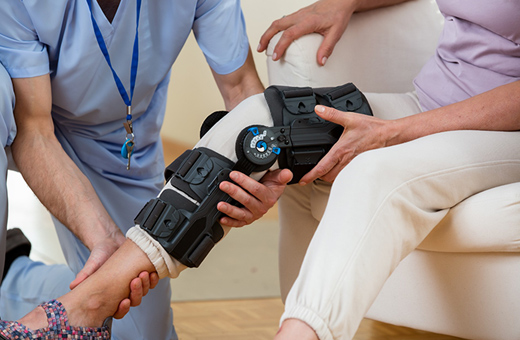
- Knee braces and splints to stabilize your joint and help you recover after injury or surgery
- Spinal orthotics to stabilize and support your spine
- Upper limb orthotics, such as braces and splints for your wrist, elbow and shoulder
Custom orthotics are custom-made for a specific part of your body. They require a prescription. Premade orthotics are available at doctors’ offices as well as online and in stores. There are different types of custom and premade orthotics.
Accommodative Orthotics
Accommodative orthotics are made of soft, flexible material that molds to the shape of the treatment site. The device cushions and takes pressure off an injured area. Your provider may recommend this custom orthotic if you have diabetic foot ulcers or a neuromuscular disorder.
Functional Orthotics
Functional orthotics are made from semi-rigid material, such as carbon fiber, graphite or plastic. These customized orthotics improve your body alignment, helping to readjust how you move, walk, stand and sit. They can help if you have a joint condition or sports-related orthopaedic condition, such as tendonitis. They also treat carpal tunnel syndrome and other occupational orthopaedic conditions.
Premade Orthotics
Premade orthotics are mass-produced to fit average body sizes. They provide support and cushioning. But they lack the customization needed to correct body movement issues (biomechanics).
Request an Appointment
As Sacramento's No. 1 hospital, you'll benefit from unique advantages in primary care and specialty care. This includes prevention, diagnosis and treatment options from experts in 150 specialties.
Referring Physicians
To refer a patient, submit an electronic referral form or call.
Patients
Call to make an appointment.
Consumer Resource Center
What to Expect
You will need a prescription from a doctor or advanced practice provider to receive a custom orthotic device. We work with many health insurers. However, it is a good idea to check with your insurance provider so you understand your coverage.
-
Preparing for an Orthotic Appointment
Wear comfortable clothing and shoes that you would normally wear for walking or exercise. Make sure your orthotist has medical records related to your diagnosis and treatment, including imaging.
-
Getting Fitted for a Custom Orthotic Device
At the initial appointment, an orthotist will learn about your health history, symptoms and activity level. They will measure your height, weight and affected body part. They may use 3D imaging or make a mold of the body area. Your provider may have you walk on a treadmill or across the room to observe how you move (gait analysis).
-
Receiving a Custom Orthotic Device
It can take a few weeks to make a custom orthotic. At an appointment for the fitting, the orthotist will make sure the device provides the right support and correction without causing discomfort. They can make minor adjustments to the device, if needed.
Home Care
Your orthotics care team will review any actions you should take after you get the device. If you’re having issues with the device, contact your provider. Don’t stop wearing it.
Wear Your Orthotics
It can take a few weeks to get used to an orthotic. It is important to wear the device as prescribed. In some cases, you may wear the orthotic for a few hours each day, gradually increasing the time as your body adjusts.
Get Follow-Up Care
You should see your orthotist two to four weeks after getting your orthotic to discuss any issues and symptom changes. It can take several weeks or months to notice changes from wearing an orthotic.
Continue With Rehabilitation Therapy
Many people who get custom orthotics also benefit from physical therapy, occupational therapy or both. Your orthotist works closely with these providers to address all symptom concerns and promote treatment success.
Awards and Recognitions
Ranked among the best in 6 specialties
A U.S. News & World Report best hospital in cancer care, cardiology, heart & vascular surgery, geriatrics, neurology & neurosurgery, orthopedics, and pulmonology & lung surgery.
Ranked among the nation’s best children’s hospitals
U.S. News & World Report ranked UC Davis Children’s Hospital among the best in pediatric nephrology, orthopedics*, and neonatology. (*Together with Shriners Children’s Northern California)
Ranked Sacramento’s #1 hospital
Ranked Sacramento’s #1 hospital by U.S. News, and recognized in 23 types of care including acute kidney failure, cancer care, cardiology, heart & vascular surgery, COPD, colon cancer surgery, diabetes, diabetes & endocrinology, ear, nose & throat surgery, gastroenterology & GI surgery, geriatrics, gynecological cancer surgery, heart arrhythmia, heart attack, heart failure, hip fracture, hip replacement, leukemia, lymphoma & myeloma, lung cancer surgery, neurology & neurosurgery, orthopedics, pneumonia, pulmonology & lung surgery and stroke.
The nation’s highest nursing honor
UC Davis Medical Center has received Magnet® recognition, the nation’s highest honor for nursing excellence.
World-class cancer care
One of ~59 U.S. cancer centers designated “comprehensive” by the National Cancer Institute.

A leader in health care equality
For the 13th consecutive year, UC Davis Medical Center has been recognized as an LGBTQ+ Healthcare Equality Leader by the educational arm of America’s largest civil rights organization.
Latest News