
15 Years: Shaping what’s next in health care
Where a bold vision became a school
When the first students arrived at the Betty Irene Moore School of Nursing at UC Davis in fall 2010, they stepped into something new — not just for UC Davis, but for nursing education. The school opened with two academic programs, 33 students and no alumni network. What it did have was a bold vision: to prepare health professionals who could lead change across care settings, health systems and communities.
Those first programs were intentionally designed to focus on research, leadership and bold system change. The goal was to prepare graduates who could ask new questions, challenge existing models and help reshape how care is delivered.
“We were inspired by Betty Moore’s vision to make a difference in how we deliver health care. We focused on building a new interdisciplinary model for preparing leaders who could advance health across systems and the community,” explained founding dean Heather M. Young, who now serves as national program director for the Betty Irene Moore Fellowship for Nurse Leaders and Innovators.
Starting with a bold idea — and the courage to build something new
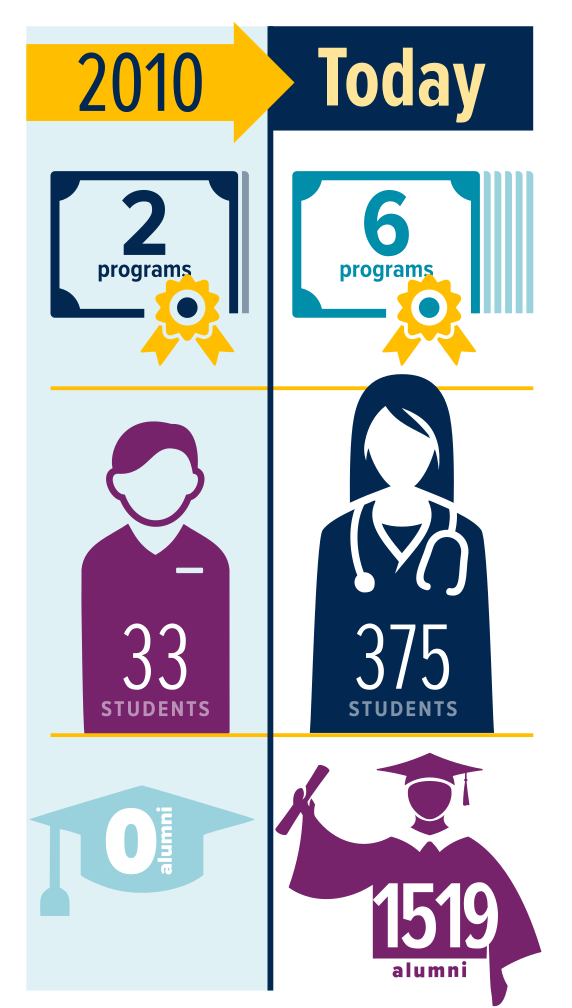 From 2 programs and 33 students to 63 programs, 375 students and 1,519 alumni: 15 years of extraordinary growth.
That vision shaped everything — from curriculum design to partnerships to the way faculty and students approached their work together. Early faculty members understood they were helping build something that would need to evolve alongside health care itself. “There was a real sense of responsibility. We knew we were creating programs and experiences that had to prepare graduates for a future we couldn’t fully predict,” said Deb Bakerjian, founding faculty and current associate dean for practice.
For the inaugural students, the experience carried both excitement and pressure. They were learning in an environment that encouraged collaboration, innovation and leadership, while also helping define what the school would become.
“We knew we were part of something special. It never felt like we were just students receiving an education. We felt invested in building something,” said Lori Kennedy, an inaugural PhD student who now serves as an associate professor at the school. “Our success was the school’s success and there was a shared sense of ownership in shaping what this school would become.”
Growing alongside a health care system that never stands still
As health care needs evolved, so did the school. The academic portfolio expanded to include four clinical degree programs and one clinical certificate program. That broadened the school’s ability to prepare providers while maintaining its strong foundation in research, leadership and system-level thinking.
Today, that evolution is visible in the school’s growth and reach. The School of Nursing now includes six academic programs, approximately 350 students and more than 1,500 alumni working across clinical care, research, education and health system leadership. The growth reflects more than expansion. It reflects the strength of a foundation built intentionally — one that prepares graduates to meet workforce needs, lead in evolving care environments and improve health outcomes across diverse communities.
“This milestone isn’t just about how far we’ve come,” explained Stephen Cavanagh, dean since 2019. “It’s about whether we are preparing the workforce our communities will need next and ensuring our graduates are ready to lead, adapt and drive meaningful change across health care.”
What began as an idea has become a thriving academic and practice community. Sustained leadership, dedicated faculty and staff, and students and alumni committed to making a difference have shaped the school and continue to move this mission forward.
As the school marks 15 years, the focus remains forward. The same spirit that defined its launch continues to guide its work today: preparing health professionals who are ready to lead, adapt and help shape the future of health care.