
Turn your experience into impact in mental healthcare
UC Davis graduate finds UC PMHNP program that united her interests in trauma, brain and psychiatric care
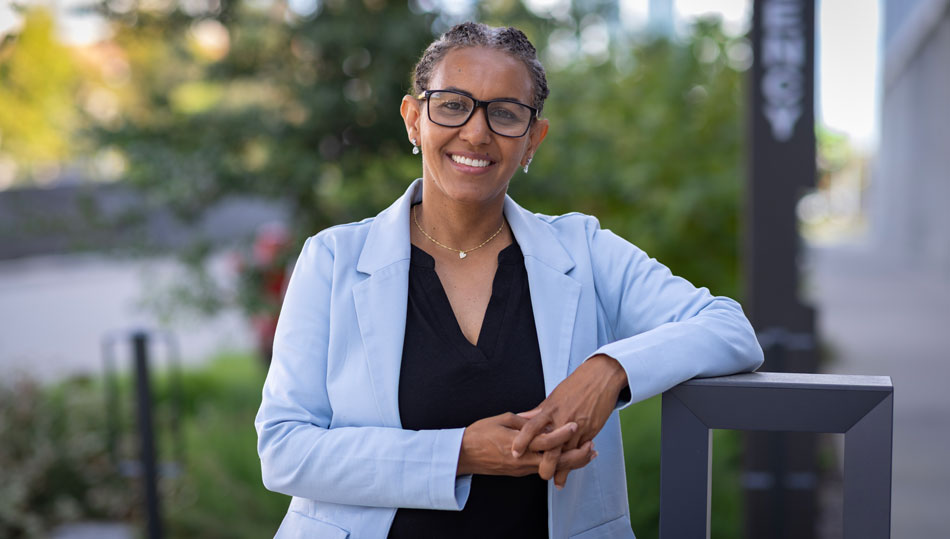
For more than 17 years, Selam Gebrezghi has cared for patients in places where people are often at their most vulnerable.
She has worked in emergency medicine, Indian Health Service, primary care, women’s health and neurology. She also served in the military for 16 years, where she saw the effects of depression and post-traumatic stress among service members.
The settings were different. But Gebrezghi kept seeing the same thing.
“No matter where I served, mental health was part of the clinical practice.”
That realization eventually brought her back to where her career began. Gebrezghi earned a psychology degree from UC Davis in 2002. More than two decades later, she returned to her alma mater and graduated in June from the UC Psychiatric Mental Health Nurse Practitioner Certificate Program.
Learning to see the whole patient
Gebrezghi wanted more than another credential. She wanted the skills to better understand what was happening beneath a patient’s immediate symptoms.
In emergency care, she treated the injury in front of her. In neurology, she saw patients with depression, anxiety, sleep problems and other mental health concerns alongside neurological conditions.
Psychiatric training taught her to ask different questions.
“What really happened in this person’s life?” Gebrezghi said. “What are they experiencing emotionally? And what is their environmental, cultural, family, social factors that are really influencing what I’m seeing clinically?”
Through advanced preparation in psychiatric assessment, diagnosis, treatment and psychopharmacology, Gebrezghi says she became more confident caring for people with complex needs.
“The program helped me become really more comfortable sitting with complexity rather than expecting everyone’s presentation to fit like neatly into one diagnosis.”
A demanding year — with support behind you
The 12-month UC PMHNP program is primarily online, but that flexibility should not be confused with an easier path.
Students complete graduate coursework along with 16 to 24 hours of supervised clinical training each week. UC Davis recommends students work fewer than 20 hours a week while enrolled because of the program’s academic and clinical demands.
Gebrezghi reduced her own work schedule to make it possible.
“It does require a lot of commitment, and you really have to be on top of it in order for you to be successful,” she admitted.
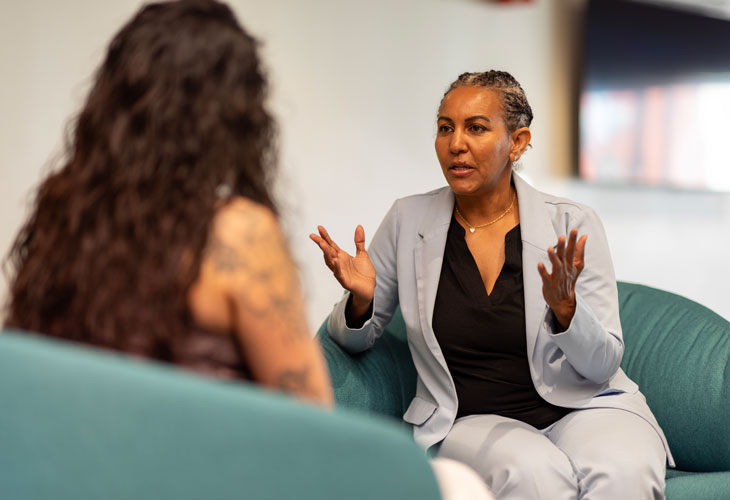
Selam Gebrezghi says the PMHNP certificate strengthened her ability to care for patients with complex needs as she prepares to support women who have experienced trauma.
But she says students do not go through it alone. Faculty coordinate clinical placements across California, and students learn in small clinical groups with experienced instructors. Gebrezghi was especially struck by their expertise and enthusiasm.
She also found something she did not necessarily expect from a primarily online program: community.
“There was a cohesiveness,” she said. “If there was a question we didn’t understand…I knew exactly where to go.”
Classmates came from specialties ranging from pediatrics to operating rooms and brought those experiences into their learning. The cohort remains in touch after graduation, celebrating as classmates pass their certification exams. The program has an approximately 93% certification pass rate.
“This program is for experienced nurses who feel called to psychiatric mental healthcare and understand the complexity of the work,” explained Program Director Lynda Creighton-Wong. “We prepare graduates with the clinical judgment and confidence to help meet California’s urgent need for mental health providers.”
Turn training into purpose
For Gebrezghi, the next step is clear.
She expects to open a private practice focused on women who have experienced sexual assault, intimate partner violence and trauma. Too often, she says, these survivors may receive emergency medical care after an assault but wait weeks for follow-up care addressing depression, anxiety, PTSD or safety.
Her goal is to help close that gap.
“When we try to refer them, there is no referral. There’s no place for them to go,” Gebrezghi said. “There’s a deeper underlying shortage that people are not realizing that if we don’t do anything about it, nobody’s going to feel better and nobody’s going to get better.”
For experienced nurses considering psychiatric mental healthcare, Gebrezghi’s journey offers both a challenge and an invitation: The work is demanding. The need is real. And for those called to do it, the opportunity to change lives is just as real.