A global experience with a lasting impact
Donor-supported learning in Kenya equips alumni to strengthen care at home and around the world
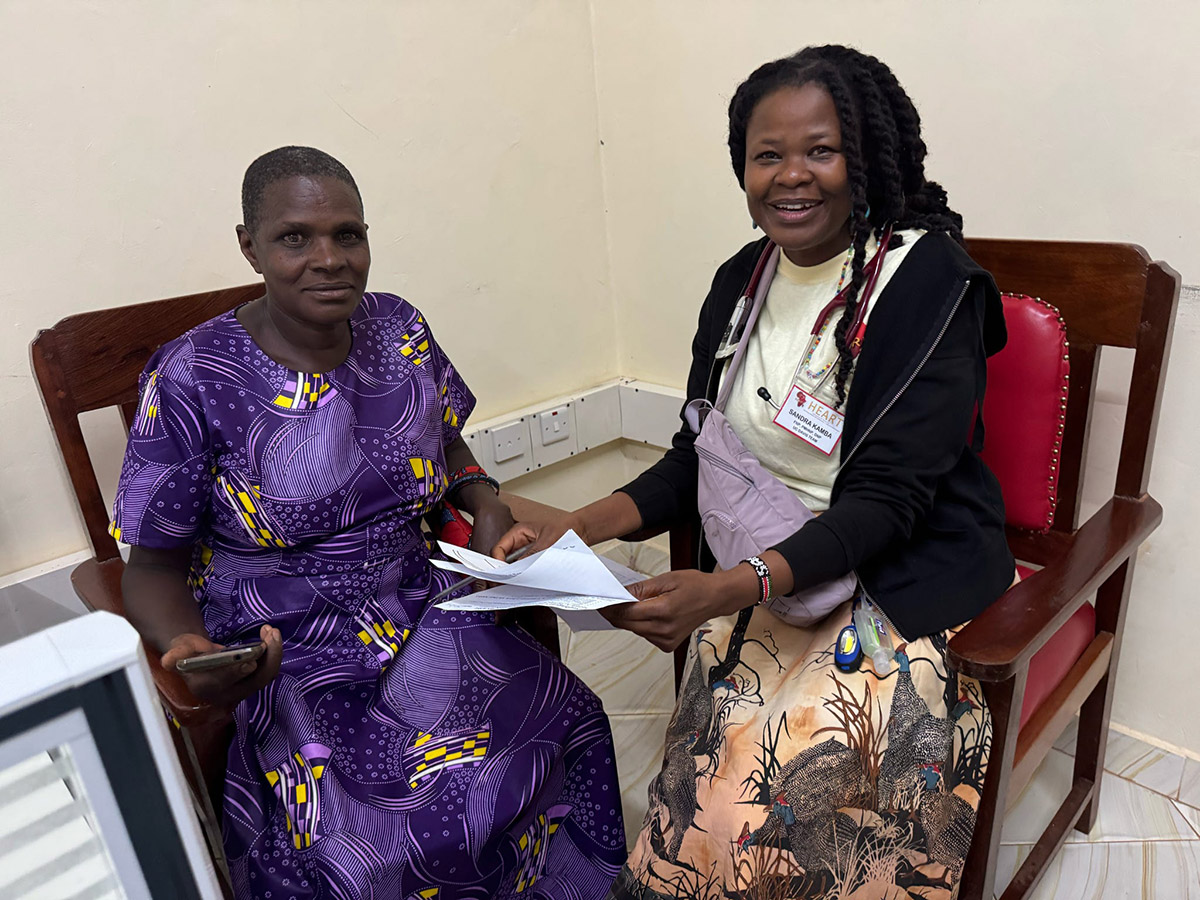 Sandra Kamba, right, meets with a patient in Kenya, where hands-on learning strengthened her confidence and clinical judgment.
When Sandra Kamba traveled to Kenya as an advanced practice provider fellow at the Betty Irene Moore School of Nursing at UC Davis, she expected to learn. What she did not expect was how deeply the experience would shape her confidence as a healthcare provider.
Originally from Zimbabwe, Kamba, a family nurse practitioner, conducted HIV and sexually transmitted infection prevention research before moving to the United States. Returning to Africa as a clinician gave her the chance to build on that work while developing new skills alongside School of Nursing faculty and Kenyan health professionals.
“You were really an intricate part of the team,” Kamba said.
Kamba participated in the School of Nursing’s long-standing partnership with the University of Nairobi and the Health Education Africa Resource Team, or HEART. Students and faculty travel to Kenya annually to provide care through mobile clinics and community health screenings while learning alongside Kenyan clinicians.
Laura Van Auker, clinical professor for the Doctor of Nursing Practice — Family Nurse Practitioner program and lead faculty member for the Kenya trips, credits Dean Stephen Cavanagh and UC Davis Global Affairs with helping expand global learning opportunities through partnerships such as the Kenya program.
Learning that goes both ways
For Van Auker, the experience goes far beyond clinical care.
“We provide modeling and teaching around the advanced practice nurse role newly ratified in Kenya and they provide us learning around cultural influences of HIV positive persons living in low resource health settings,” Van Auker said.
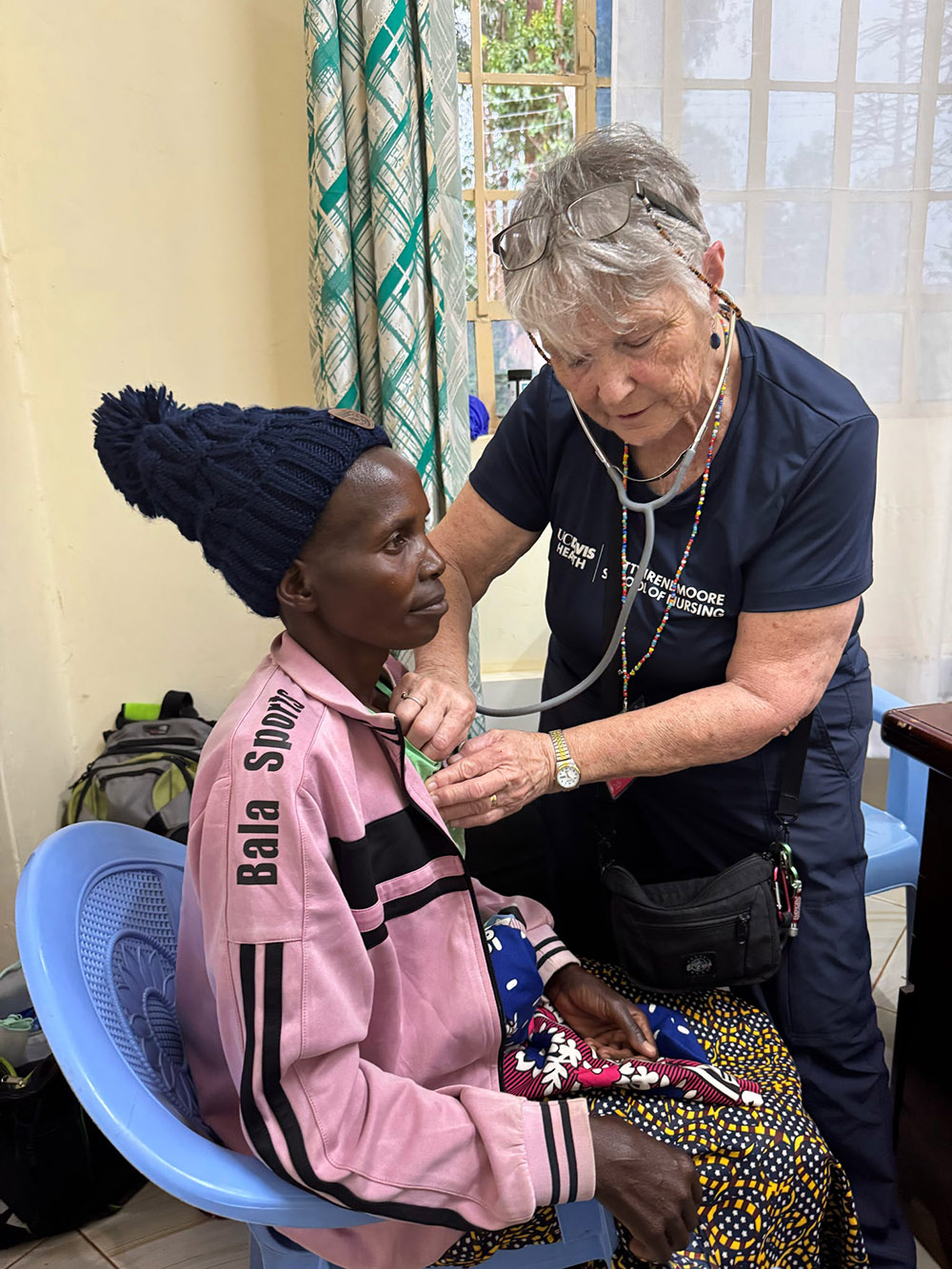 Laura Van Auker, right, conducts an exam in Kenya, where students and faculty learn alongside local health professionals.
Students work directly with patients, gathering health histories, conducting assessments and helping develop treatment plans with Kenyan clinicians and faculty. When laboratory testing, internet access and other resources are limited, students must rely on their own physical assessment skills, clinical knowledge and critical thinking to what treatment will work for each patient.
In rural communities, that can mean finding ways to assess and care for patients with only the resources available at the mobile clinic. For some patients, the visit may be their only opportunity to see a healthcare provider. Students learn to ask more questions, think broadly about diagnoses, uncommonly seen in the U.S. and develop treatment plans, that reflect what patients can realistically access with limited resources.
“You really had to learn to trust your voice,” Kamba said.
Lessons beyond the classroom
For Kamba, that responsibility helped her see herself not just as a student, but as a clinician capable of making sound decisions for her patients.
“I am where I’m supposed to be,” she said.
That confidence was only part of what Kamba brought home. The experience also taught her to listen more closely to patients, consider the realities of their lives and adapt care to the resources available to them. Those lessons continue to shape how she cares for patients today.
They also matter at home. Californians may face barriers to medications, transportation and follow-up care. Learning to listen, adapt and develop realistic person-centered plans prepares graduates to care for people with different needs, backgrounds and resources.
“When we have practitioners who can reach all kinds of communities, then we’re doing a service to our community at large,” Kamba said.
That lasting impact is one reason Van Auker invests both her time and philanthropy in the program. Donor support helps make the experience possible for students who otherwise may not be able to participate.
For donors, the impact reaches far beyond one trip. Their investment helps shape health care providers who apply what they learn in Kenya that shape the care they provide throughout their careers.
“Every donation that goes into this global program to support these students is magnified by the benefits experienced by the patients that they serve over time,” Van Auker said.