Betty Irene Moore Fellow explores dementia caregiving, nursing science and faith in new book
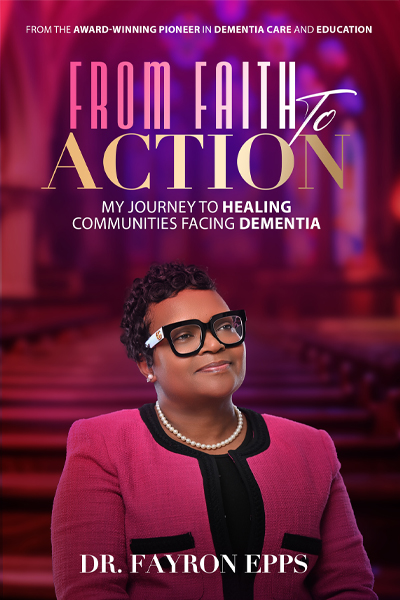 Fayron Epps, 2022 cohort Betty Irene Moore Fellow, published “From Faith to Action: My Journey to Healing Communities Facing Dementia."
May 7, 2026
By Megan Hansen
By the time nurse leader Fayron Epps realized she needed to write a book, she had already answered the same questions about the intersection of her personal and professional journeys hundreds of times.
As a 2022 cohort Betty Irene Moore Fellow and the Inaugural Karen and Ronald Hermann Endowed Chair in Caregiver Research at the University of Texas Health Science Center at San Antonio School of Nursing, Epps is a national voice at the intersection of dementia, caregiving and faith communities. She is frequently asked about her path as a nurse researcher, her motivation, and how faith and science intersect in her work.
“People always wanted the backstory. And while I was grateful, it became exhausting,” Epps said. “The idea for the book emerged during a fellowship convocation. After speaking with a colleague who is a business coach, I started writing down my answers to the questions I was always being asked.”
The result is “From Faith to Action: My Journey to Healing Communities Facing Dementia,” released Oct. 1, 2025. The book offers a personal yet practical account of her journey. She invites readers to understand her work and join her in building more compassionate, faith-centered communities that support caregivers, reduce stigma and foster healing for families affected by dementia.
Crushing the proverbial box
For a year, Epps set aside time each Saturday morning to write. Her business coach evolved into a writing coach, providing prompts to help translate her ideas onto the page.
“As scientists, we often write for the word or page limit, but I was able to trust God to put in my heart what to put on the page.” — Fayron Epps
“I would just write everything I wanted to say,” she recalled. “As scientists, we often write for the word or page limit, but I was able to trust God to put in my heart what to put on the page.”
That sense of freedom and clarity marked a turning point. Epps credits the Betty Irene Moore Fellowship for Nurse Leaders and Innovators with strengthening her confidence and unlocking a deeper level of creativity.
“The fellowship encourages us to challenge traditional systems and think differently about how to create change,” Epps said. “It’s pushed me not just to think outside the box, but to crush it entirely to do other things.”
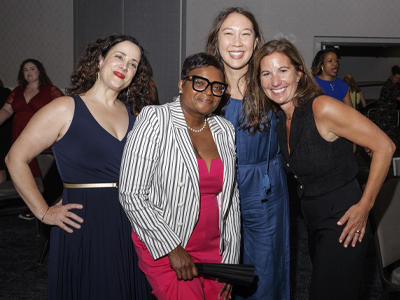 Betty Irene Moore Fellows Veronica Barcelona, Fayron Epps, Kristen Choi and Joan Carpenter celebrate their completion of the three-year fellowship program at Convocation 2025 in Washington, D.C.
Through the program, she engaged with a wide range of perspectives from her peers, the Fellowship National Advisory Council, mentors, nurse leaders, national subject matter experts and program faculty. This exposure to diverse professional backgrounds and personal missions reinforced the important lesson that there is no single way to be a nurse scientist or approach one’s work.
“Ultimately, we all share the same goal of improving outcomes for the communities we serve,” Epps said. “The fellowship shows that there are many unique and different ways to get there.”
One of those paths is storytelling. Epps’ book has resonated across professional, caregiving and faith communities. The final chapter, focused on legacy and impact, has been especially well received. It grew out of a fellowship exercise that asked participants to write their own obituary – an experience that helped her clarify what she hopes her work will leave behind.
“I had a faith leader tell me they believed their work was done until they read the book, and it inspired them to keep going,” she said. “What surprised me most was realizing it could move people to take action.”
Keeping the faith
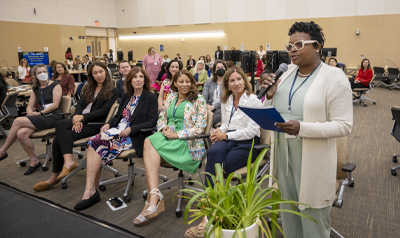 Fayron Epps presents her research to a panel of journalists at Convocation 2024 in Sacramento, California.
At the heart of the book is Epps’ refusal to separate faith from science, despite professional training that once encouraged her to do so. Raised in the church, she describes how her faith deepened through her research rather than diminishing because of it. One of her first grant-funded projects, which focused on adapting worship services to better include people living with dementia, became a pivotal moment in her life.
“It was the beginning of me recognizing it’s OK to intertwine the two,” she said. “It hasn’t been easy, but each year I get bolder with it.”
Epps notes that colleagues increasingly share how meaningful it is to hear faith acknowledged in her professional presentations. At the same time, support for her research and community work has continued to grow.
“That tells me I need to keep going,” she said. “It allows me to be a testimony for others to follow their passions, too.”
Building on Momentum
 Fellow cohort member Joan Carpenter joined Fayron Epps at the Alter Dementia Summit in East Point, Georgia to present on advance care planning.
Her integration of faith and science led Epps to launch the Alter program in 2019 – a faith-based initiative that partners with churches and community organizations to support African American families navigating a dementia or Alzheimer’s disease diagnosis. When she joined the fellowship in 2022, she expanded this work, focusing her project on improving outcomes for Black dementia caregivers.
Last month marked the third Alter Dementia Summit. Nearly 600 researchers, health professionals and members of the African American community gathered to address dementia-related challenges, strengthen family support systems and drive meaningful, sustainable change in brain health and caregiving. Epps expressed that the support of the fellowship program has been instrumental in helping the initiative grow and thrive.
“Having the backing of the fellowship, along with support from peers and program leaders, inspired me and it truly sparked my creativity,” Epps said.
That same spirit of support and inspiration extends beyond her professional work and into her personal life. Her three children, along with her mother and aunt, have become some of her strongest sources of encouragement, promoting her book in the community and helping her celebrate milestones she once never imagined.
“I’m proud of myself for writing the book,” she said. “I did something I never thought I would do.”
That sense of accomplishment is matched by a growing sense of momentum. Epps is expanding her “Dr. Fayron” brand into a broader platform focused not only on dementia, but on cultivating a wider culture of care. She envisions more summits, community movements and creative projects that reach audiences of all ages, including children’s books and puppetry.
“Dr. Epps is a force for good in this world, reaching people where they are with deep relevance. Her work is aligned with our mission to support nurse leaders who challenge convention and reimagine how care is delivered and experienced. Her integration of scholarship, faith and community engagement exemplifies the bold, systems-level thinking the fellowship is designed to cultivate and we look forward to what she will do next,” said Heather M. Young, national program director for the fellowship.